Pokemon TCG Storage and Display Guide 2026: How to Protect and Show Off Your Collection
Pokemon TCG Storage and Display Guide 2026: How to Protect and Show Off Your Collection
Pulling a Special Illustration Rare from a pack is one of the best feelings in the hobby. Discovering a surface scratch on it three weeks later because it was sitting loose in a stack is one of the worst. Card condition directly affects card value, and the damage that reduces a card from near mint to lightly played often happens in the first few hours after it leaves the pack, before the collector has had a chance to think about protection.
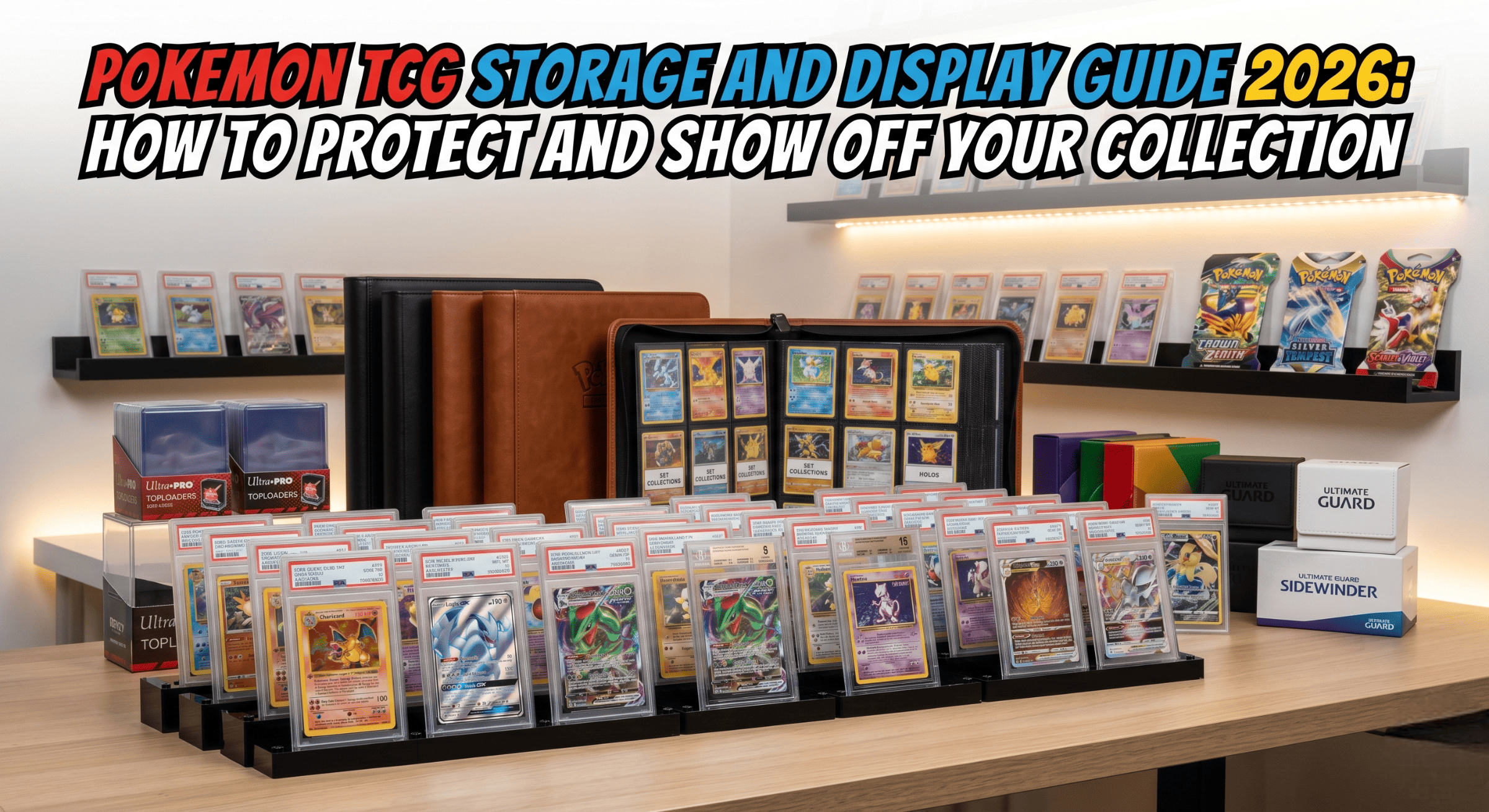
This guide covers everything you need to store and display your Pokemon TCG collection properly in 2026. From the basics of penny sleeves and top loaders through to binder selection, hard cases, long term sealed product storage, and display solutions for showing off your best cards, this is the practical reference for protecting what you pull and presenting it at its best.
Why Storage and Protection Matters More Than You Think
Pokemon TCG cards are printed on layered cardstock with foil and ink finishes that are more vulnerable to damage than they appear. Surface scratches from contact with other cards or abrasive surfaces show up clearly on holographic and textured cards under angled light even when they are invisible under direct overhead lighting. Edge whitening from handling occurs quickly on any card that is picked up and put down repeatedly without sleeve protection. Corner wear from stacking unsleeved cards even briefly is impossible to reverse.
For high value cards the practical consequences are significant. A Mega Gengar ex SIR in genuine near mint condition is worth meaningfully more than the same card in lightly played condition. The difference in grade at PSA or CGC submission can be the difference between a PSA 10 and a PSA 8, which on a popular card can represent hundreds of pounds of value. Good storage habits cost almost nothing. Poor storage habits can cost a great deal.
The single most important habit to build is sleeving cards the moment they come out of a pack, before any further handling. Everything else in this guide builds on that foundation.
Penny Sleeves: The Non Negotiable First Layer
A penny sleeve is a thin, soft plastic sleeve that goes directly over a card as the first layer of protection. Every card you pull from a pack should go into a penny sleeve before it touches anything else. This is not optional for cards you care about. The time between a card leaving the pack and entering a penny sleeve is the highest risk window for surface damage in the entire life of that card.
Penny sleeves are not expensive and are available in packs of 100 from most card game retailers. Keep a supply of them next to you whenever you are opening packs so you can sleeve immediately rather than handling cards for extended periods before protection is applied. Insert the card top first, which means the playing surface faces the open end of the sleeve, reducing the risk of the card sliding out during normal handling.
Penny sleeves alone are not sufficient long term protection for valuable cards. They protect against surface scratches but provide no structural protection against bending, edge damage, or compression. Think of them as the essential first layer that everything else sits on top of.
Top Loaders: Rigid Protection for Valuable Cards
A top loader is a rigid plastic case that slides over a penny sleeved card to provide structural protection. The combination of a penny sleeve inside a top loader is the standard protection setup for any card worth over approximately ten pounds that you intend to handle, transport, or store individually rather than in a binder.
Top loaders come in standard sizes for modern Pokemon TCG cards and in thicker variants for cards with additional layers such as graded cards or oversized cards. For standard modern Pokemon TCG cards, the regular standard size top loader is the correct choice. Penny sleeve the card first, then slide it into the top loader with the open end of the penny sleeve at the top of the top loader so the card cannot slide out through gravity.
One Card Saver 1 is worth knowing about separately from standard top loaders. Card Savers are semi rigid rather than fully rigid, meaning they flex slightly under pressure. This makes them the preferred submission holder for PSA grading. If you are planning to submit cards for grading, use Card Saver 1 holders rather than rigid top loaders, as PSA specifically requests this format and rigid top loaders can be difficult to open without handling the card during the grading process.
Binders: Organising and Displaying Your Collection
A binder with nine pocket pages is the standard display and organisation solution for a Pokemon TCG collection of any meaningful size. The choice of binder and pocket page type matters considerably more than most beginners realise.
Always use side loading pocket pages rather than top loading pages. Side loading pages have the card pocket opening on the side rather than the top, meaning cards cannot fall out when the binder is held vertically or stored upright on a shelf. Top loading pages allow cards to slide out through the open top under gravity, which leads to cards falling, picking up edge damage, and in worst cases being damaged significantly. The difference in safety between the two formats is substantial and the correct choice is always side loading.
The pocket material matters for long term storage. Pages made from polypropylene are acid free, will not yellow or degrade over time, and will not interact chemically with the card surface. Avoid pages made from PVC plastic, which can off gas chemicals over time that damage cards in prolonged contact. Most premium binder pages from established suppliers use polypropylene as standard, but it is worth verifying before buying.
For cards going into a binder, a penny sleeve inside the pocket page provides adequate protection for most cards. For your most valuable cards in a binder, a penny sleeve inside a soft sleeve inside the pocket page adds a layer of cushioning that reduces the risk of foil surface damage from the card moving within the pocket over time. This double sleeve approach takes up slightly more space in the pocket but is worth it for SIR and Hyper Rare cards displayed in a binder.
Binder organisation is a personal choice but the most common approaches among experienced collectors are by set and number, which preserves the integrity of each set's card list and makes locating specific cards straightforward, and by rarity, which groups your best cards together for display impact. For binders that you show to others or use for display purposes, organising by rarity with your SIRs and highest value cards in the front pages tends to create the strongest visual impression.
Hard Cases and Magnetic Cases: Premium Individual Protection
For your single most valuable cards, hard cases provide the highest level of protection available outside of professional grading. A hard case is a rigid two piece plastic enclosure that holds a single card in a fixed position with no movement possible within the case. The card cannot slide, bend, or be affected by external pressure within the case.
Magnetic cases, sometimes called one touch cases, are the most popular format among collectors. They are two piece rigid plastic cases held together by magnets rather than a locking mechanism, making them easy to open and close without tools while providing excellent card security. They come in several thickness ratings, with 35pt being the standard for modern Pokemon TCG cards and thicker variants available for cards with additional foil layers that add measurable thickness.
Hard cases are the right choice for any card worth over approximately fifty pounds that you want to display individually, transport safely to events or trades, or hold long term without the handling risks associated with top loaders. They also provide a professional presentation quality that makes high value cards look their best when displayed or photographed.
Graded Slabs: The Ultimate Protection and Authentication
A graded card in a PSA or CGC slab is the most protected a single card can be outside of a bank vault. The tamper proof sealed slab prevents any further handling damage, authenticates the card permanently, and provides a condition record that the secondary market accepts as definitive. For cards worth grading, the slab also significantly reduces the ongoing risk of condition degradation from handling over years or decades of ownership.
Graded slabs should be stored standing upright rather than stacked flat. Stacking slabs applies pressure to the edges of the cases below and can cause micro cracking in the slab material over time. Store them upright in a cool, dry location away from direct sunlight, which can cause the label to fade and the card inside to yellow over long periods. Specialist slab display cases and stands are available and are worth investing in for any meaningful graded collection.
Sealed Product Storage: The Forgotten Priority
Collectors who hold sealed Pokemon TCG products for long term value often focus heavily on card storage while neglecting sealed product storage, which can be just as damaging to value over time.
Sealed booster packs and ETBs are vulnerable to moisture, temperature cycling, UV exposure, and physical pressure. The cardboard packaging of ETBs and booster boxes absorbs moisture in humid conditions and warps, while the packaging of individual booster packs can develop creases and crushing that reduce collector appeal significantly. A sealed ETB with damaged packaging is worth less than one in pristine condition, regardless of what is inside.
Store sealed products upright rather than stacked horizontally where possible. Horizontal stacking applies the full weight of upper products to lower ones, which over time compresses packaging and can damage the packs inside. If horizontal stacking is unavoidable, limit stack heights and rotate the position of products periodically.
Keep sealed products away from direct sunlight. UV exposure yellows cardboard packaging and can cause the holographic elements visible through booster pack windows to degrade over time. A dedicated storage space away from windows, in a stable temperature environment between 15 and 22 degrees Celsius with moderate humidity, is ideal. For long term storage of significant sealed product holdings, sealed plastic storage containers with desiccant packs to control humidity provide an additional layer of protection.
The original outer packaging for ETBs and collector products should be kept if possible. Many serious collectors store their ETBs inside the original shipping box or a protective outer sleeve to preserve the corners and edges of the product packaging. Corner damage and surface scuffs on ETB packaging are the most common causes of condition reduction for sealed products on the secondary market.
Display Solutions: Showing Off Your Best Cards
Building a collection that sits permanently in a binder and is never seen is a reasonable choice but many collectors want to display their best cards prominently. Several practical solutions exist for displaying Pokemon TCG cards attractively and safely.
Acrylic display stands are the simplest solution for individual card display. A card in a hard case or top loader sits in an acrylic stand on a desk or shelf and can be viewed and appreciated without handling the card itself. They are inexpensive, widely available, and effective for displaying a small number of featured cards without committing to a larger display setup.
Wall mounted display frames designed for trading cards allow larger collections of featured cards to be displayed vertically. Multi card frames that hold nine, twelve, or more cards in a grid arrangement create an impressive display for a set of SIRs or a complete Eeveelution collection. When using wall frames, ensure the frame is UV protective to prevent light damage to the cards inside, and position the frame away from direct sunlight regardless of UV protection rating.
Graded card display cases are purpose built for showing slabs at their best. Standalone cases hold single graded cards vertically in a protected acrylic enclosure. Larger display cases hold multiple graded cards in rows and are popular among serious graded collectors who want their best cards visible without the risk of dust accumulation or handling damage.
Binder display is still the most practical solution for collections of any meaningful size. A high quality binder with premium side loading pages, opened to your best cards and laid flat on a display surface, creates an impressive and instantly shareable collection display. Many collectors photograph their binder spreads for community sharing, which is another reason to invest in quality page presentation from the start.
The Collector's Hierarchy: Matching Protection to Value
Not every card needs the same level of protection, and over protecting low value cards wastes money and space. A practical approach matches the protection level to the card's value and your long term plans for it.
Commons, uncommons, and standard rares that you keep for gameplay or casual collection purposes: a penny sleeve in a binder page is adequate. Double Rares and Illustration Rares worth between five and thirty pounds: penny sleeve in a binder or penny sleeve in a top loader for individual storage. Ultra Rares and Mega Attack Rares worth between twenty and sixty pounds: penny sleeve in a top loader or hard case, with a binder as an alternative for collection display. Special Illustration Rares and Mega Hyper Rares worth over fifty pounds: penny sleeve inside a hard magnetic case, with grading submission considered for cards in exceptional condition. Cards worth over one hundred pounds that you intend to keep long term: grading submission should be seriously evaluated at this threshold, with hard case protection in the interim.
Building Good Habits From Day One
The collectors who consistently maintain the best condition cards are not the ones who spend the most on protective equipment. They are the ones who build consistent habits around handling cards carefully, sleeving immediately after pulling, and thinking about storage as part of the pack opening experience rather than an afterthought.
Keep penny sleeves, top loaders, and hard cases to hand before you open packs rather than searching for them after something valuable has been out of protection for twenty minutes. Clean your hands before handling cards. Open packs over a clean, soft surface rather than a textured or dirty one. And give your best cards the storage solution they deserve as soon as you know what you have.
The cards you pull from sealed product at CardDeckr are starting from the best possible condition. Factory sealed, untampered product means every card comes out of the pack in the condition it left the factory. What happens next is entirely in your hands. Visit carddeckr.com to browse the current range of sealed Pokemon TCG products, sign up for a free account to get 5% off every order, and open your packs knowing that what you protect well today holds its value for years to come.
Pokémon and all related names are trademarks of Nintendo, Creatures Inc., GAME FREAK inc., and The Pokémon Company. CardDeckr is not affiliated with The Pokémon Company International.